NEO: The Next Educational Opportunity
The Next Chapter in Delaware Valley’s Student One-to-One Program
On Monday, April 27, 2026, the Delaware Valley Regional High School Board of Education approved the NEO Plan, The Next Educational Opportunity, marking the next chapter in the district’s one-to-one program. Beginning with the 2026–2027 school year, Delaware Valley will transition to MacBook Neo as its student device.
More than a decade ago, Delaware Valley launched its original integrated Plan for Academic Development, known to many simply as the iPad plan. That work established a strong foundation for anywhere, anytime learning and helped move teaching and learning from paper-based workflows into a modern digital environment.
The Foundation We Built
When Delaware Valley first adopted its one-to-one model back in 2012, the goal was to expand the way students and teachers think, work, and use tools, and to build the skills needed for life, career, personal, and social responsibilities.
At the time, classroom workflows still relied heavily on paper handouts, traditional delivery methods, and limited access to shared labs or carts. The iPad initiative helped bridge that gap by giving students direct access to digital materials, electronic textbooks, learning tools, and more flexible access to learning, both in and out of school.
That shift produced meaningful results. In the first year alone, district print output was reduced by 50 percent. Over time, dependence on paper declined substantially, and more than half of textbook titles moved to electronic format.
Measurable Impact on Learning
The district’s four-year review showed that the one-to-one program had a meaningful instructional impact, both in how students learned and in how teachers used technology in the classroom.
According to BrightBytes survey data cited in that review:
100 percent of Delaware Valley teachers agreed that technology enhanced student learning
67 percent of teachers regularly administered online assessments
58 percent of students reported collaborating online with classmates at least monthly
67 percent of students were asked to develop or present multimedia presentations on a regular basis
The same review found that students rated technology access at an exemplary level, and 90 percent of students agreed they could usually find a good solution when faced with a technology-related problem. Together, those findings show that the district’s original one-to-one program did more than reduce paper. It strengthened access, organization, confidence, and college- and career-ready technology habits.
Built on Reallocation, Not Added Cost
One of the most important lessons from Delaware Valley’s original one-to-one work was that innovation could be supported through the reallocation of resources already being used in other areas. The original transition to digital learning reduced printing, paper, and related operational costs, showing that instructional technology could move forward without creating a significant new burden on the budget.
That same philosophy continues with the NEO Plan.
Like the original iPad plan, the NEO Plan is not about adding a new budget burden to the district. It is about reallocating resources within the district’s instructional technology planning to support a more efficient and more consistent student device model.
Why the District Revisited the Model
As part of the district’s Five-Year Strategic Plan, Delaware Valley evaluated future student device options with a clear goal: to identify the tools that best support student success at DVRHS and help prepare students for success in a technological workplace.
The iPad served the district well and helped make an important transition into digital learning. But student workflow, instructional expectations, and classroom software use have continued to evolve. The question now is whether a more complete student workstation can better support the work students are being asked to do today.

Why NEO
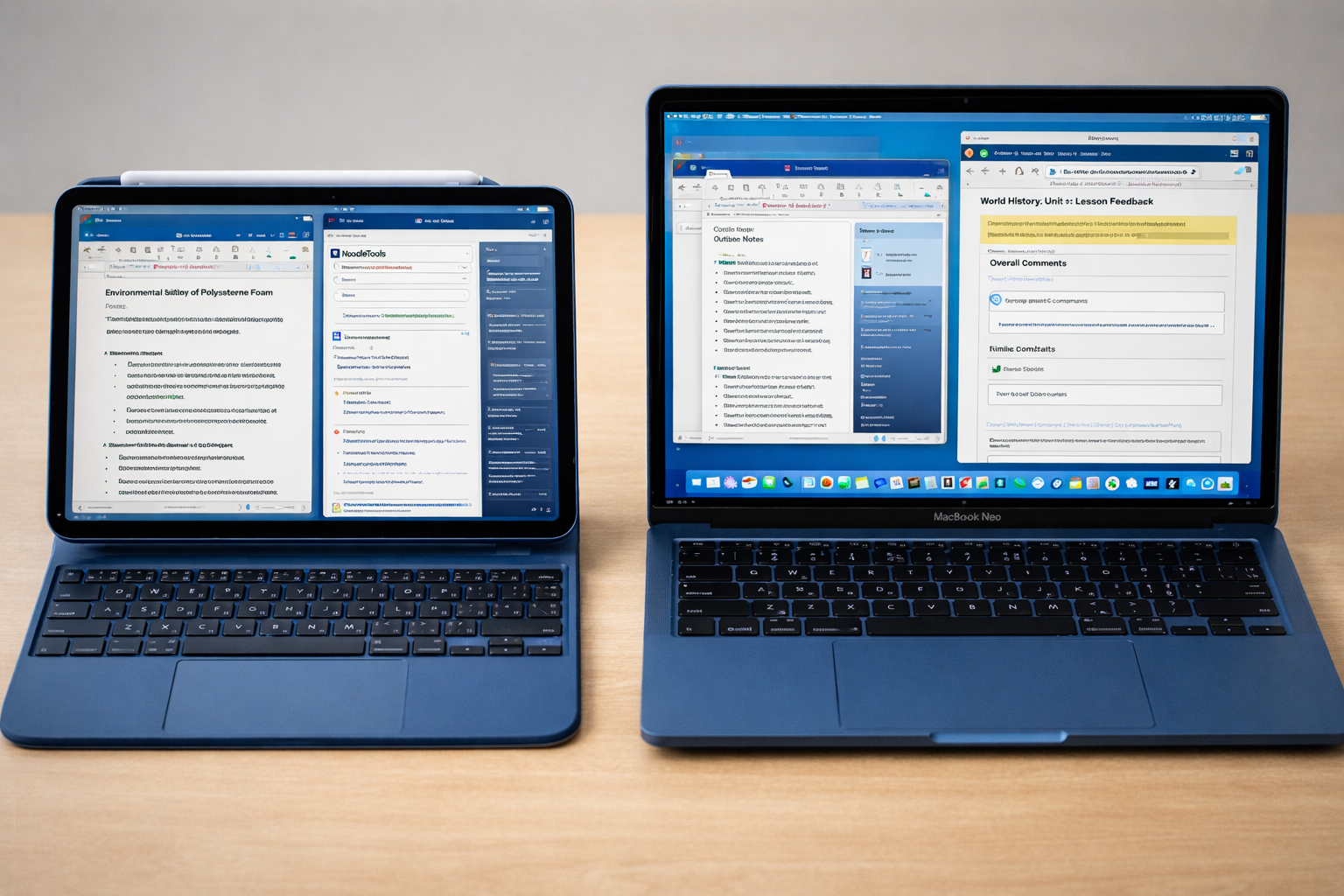
The MacBook Neo represents the district’s next educational opportunity because it better matches the kind of academic work students are increasingly being asked to do.
The district’s review found that a laptop environment more naturally supports:
sustained research
writing and revision
multitasking
project-based learning
classroom peripherals
fuller browser-based workflows
easier file management
simpler review of teacher feedback
It also creates greater consistency by aligning students with the same platform teachers have used for the past 14 years.
Why Consistency Matters
The move to MacBook Neo is about more than the device itself. It is about simplifying the student technology environment.
By reducing the number of separate student mobile devices the district must maintain, Delaware Valley can place a more capable and consistent learning tool in students’ hands while simplifying support, planning, and long-term replacement efforts. The board discussion document also notes that a MacBook Neo shift may reduce the need to maintain the same level of student mobile devices in carts and classrooms once students are issued a full one-to-one MacBook device.
That consistency matters because it gives students access to the same general type of tool throughout the day, helps teachers plan around a more predictable student device environment, and supports a more efficient long-term technology model.
Specialty Programs Will Continue to Use the Right Tools
The NEO Plan does not mean every instructional space will use the same device for every purpose.
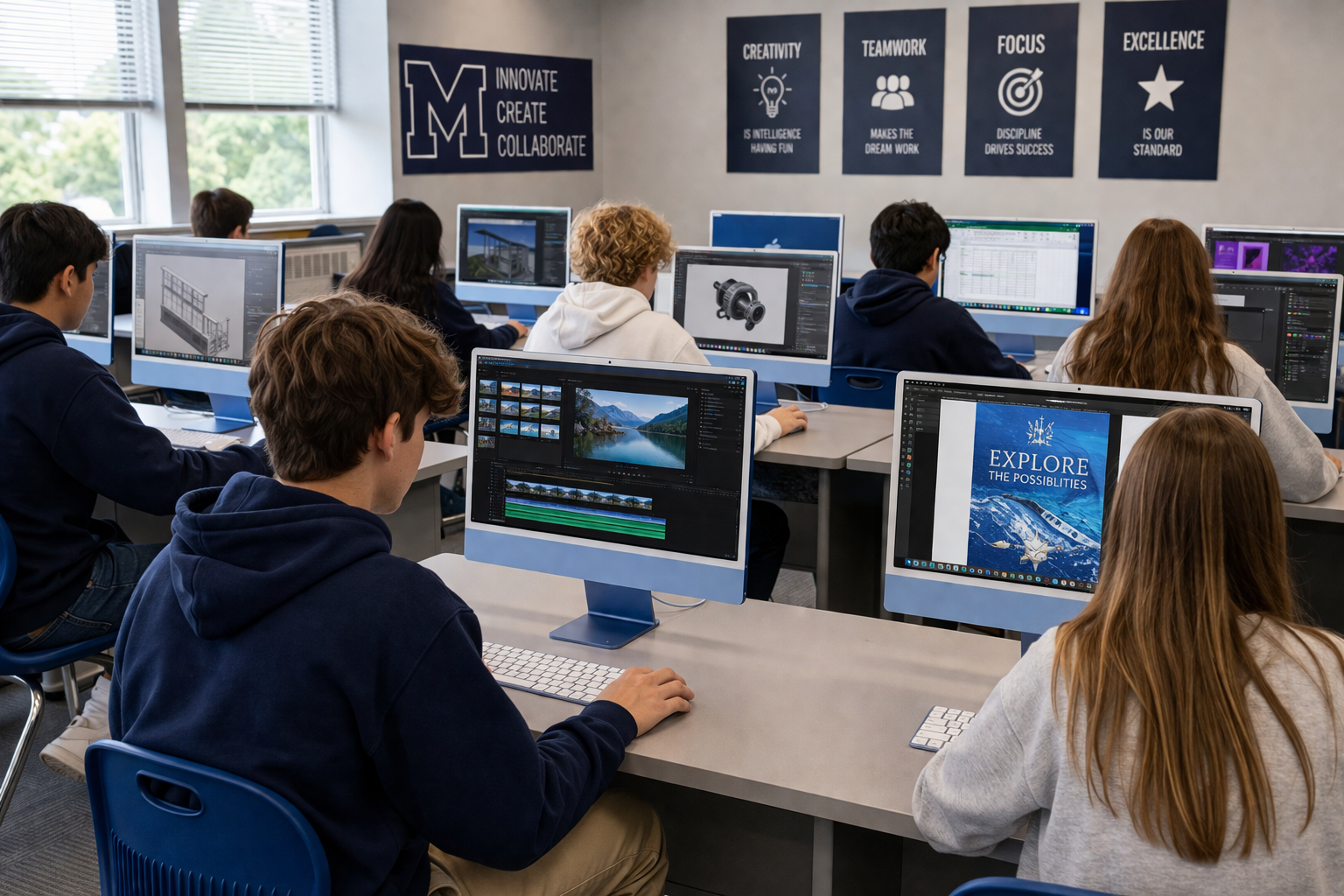
Specialty programs such as TV/media, engineering, business, and graphic arts will continue to rely on desktop systems where larger displays, specialized software, and higher-performance specifications remain necessary. The district will continue to match device types to instructional needs, with MacBook Neo serving as the general student device while specialty desktops remain in place where advanced performance is required.
Rollout Timeline
Beginning with the 2026–2027 school year, the district will replace all student devices with MacBook Neo. As part of that transition, the district plans to sell the current iPad fleet and identify mobile MacBook devices to help offset costs. This approach allows Delaware Valley to move to a more unified student device environment from the start while continuing its long-standing practice of using thoughtful planning and reallocation to support instructional technology.
Looking Ahead
The NEO Plan builds on the success of Delaware Valley’s original one-to-one program while responding to the needs of today’s students and classrooms. Beginning in 2026–2027, the district will transition students to MacBook Neo, providing a more capable and more consistent learning tool while continuing the district’s long-standing commitment to thoughtful planning through reallocation, not added budget impact.
Additional information regarding rollout timelines, student expectations, and support will be shared with families and staff in the weeks ahead.